Book Summary of 'The Lean Startup'
by Eric Ries
What is this book about?
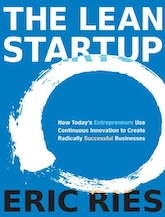
"The Lean Startup" by Eric Ries is a guide for entrepreneurs on how to create and manage successful startups in an uncertain environment. It introduces the concept of the "Lean Startup," which is a methodology that focuses on continuous innovation, validated learning, and rapid iteration to build products that meet customer needs effectively. The book emphasizes the importance of building a minimum viable product (MVP), testing hypotheses about customer needs, and making data-driven decisions to either pivot or persevere with a business idea.
Who should read the book?
This book is ideal for:
- Entrepreneurs: Whether you're just starting out or managing an existing startup, this book provides valuable insights on how to navigate the challenges of building a new business.
- Corporate Innovators: Those working within large companies who are responsible for innovation and new product development can benefit from the Lean Startup principles to drive innovation in a structured manner.
- Product Managers: Professionals who are involved in developing and managing products will find the book’s strategies on testing, learning, and iterating highly applicable.
- Business Leaders: Anyone interested in the dynamics of modern entrepreneurship, including investors and advisors, can gain a deeper understanding of how startups can be more successful.
10 Big Ideas from the Book
- Validated Learning: Startups exist to learn what customers really want, and this learning can be validated through scientific experimentation.
- Build-Measure-Learn Feedback Loop: The core process for building a successful startup involves quickly turning ideas into products, measuring customer reactions, and learning whether to pivot or persevere.
- Minimum Viable Product (MVP): Create the simplest version of your product that allows you to begin the learning process as quickly as possible.
- Pivot or Persevere: Continuously assess whether to continue on the current path or pivot in a new direction based on validated learning.
- Innovation Accounting: Develop metrics that help entrepreneurs track progress, set up milestones, and prioritize work.
- Continuous Deployment: The practice of deploying small changes frequently, which allows startups to release products quickly and gather data from real customers.
- Actionable Metrics vs. Vanity Metrics: Focus on metrics that can guide decision-making, rather than those that simply look good on paper.
- Customer Development: Engage directly with customers to test assumptions and iterate based on their feedback.
- Lean Thinking: Borrowing principles from lean manufacturing, such as reducing waste and increasing efficiency, to apply to the startup environment.
- Entrepreneurship as Management: Recognizing that a startup is an institution that requires a new kind of management geared towards rapid innovation and dealing with uncertainty.
Summary of "The Lean Startup" by Eric Ries
"The Lean Startup" is a methodology designed to help startups succeed by implementing a systematic, scientific approach to creating and managing startups. It centers on validating learning through experimentation, developing a minimum viable product (MVP), and using rapid iteration to refine the product based on customer feedback. The core idea is that startups can create value more efficiently by quickly learning what customers want and adjusting their strategies accordingly.
Eric Ries introduces a new approach to building companies that involves less risk and waste than traditional methods. The book emphasizes the importance of learning from customers as quickly as possible, rather than investing large amounts of time and money in developing products that may not meet market needs. The Lean Startup approach is applicable not only to new companies but also to established companies that are trying to innovate.
Key Insights from the Book
-
Validated Learning: The concept of validated learning is at the heart of the Lean Startup. It refers to the process of demonstrating empirically that a startup is learning how to build a sustainable business. Startups need to test their assumptions about what customers want using experiments that validate or invalidate these assumptions.
-
Build-Measure-Learn Feedback Loop: This is the engine of Lean Startup methodology. Startups begin by building an MVP, then measure how customers respond to it, and finally learn whether to pivot (make a significant change to the product) or persevere (continue with the current strategy).
-
Minimum Viable Product (MVP): An MVP is the simplest version of a product that allows a team to start the learning process as quickly as possible. The MVP is not a beta version; it is designed specifically to test a business hypothesis with the least amount of effort and development time.
-
Pivot or Persevere: After going through the Build-Measure-Learn loop, a startup must decide whether to pivot (change its course) or persevere (continue with its current strategy). Pivots can involve changes to the product, customer segment, or even the business model.
-
Innovation Accounting: To measure progress and make informed decisions, startups need to use innovation accounting. This involves tracking progress through actionable metrics rather than vanity metrics. Innovation accounting helps teams focus on what is important and make data-driven decisions.
-
Continuous Deployment: This practice involves deploying small, frequent updates to a product. Continuous deployment allows startups to get their product in front of customers quickly, gather feedback, and make improvements based on real-world data.
-
Actionable Metrics vs. Vanity Metrics: Actionable metrics are those that can influence decisions and lead to change, such as customer acquisition cost or lifetime value of a customer. Vanity metrics, on the other hand, may look good (e.g., website hits) but don’t provide insights that can drive real improvements.
-
Customer Development: This concept involves engaging directly with customers to test business hypotheses. It contrasts with traditional product development, which often assumes that the entrepreneur knows what the customer wants.
-
Lean Thinking: Adapted from lean manufacturing, lean thinking in startups involves eliminating waste (anything that does not add value to the customer) and focusing on creating continuous flow in the development process.
-
Entrepreneurship as Management: Ries argues that startups need to be managed differently than established companies. Startups require a new kind of management that is capable of navigating extreme uncertainty and is geared towards rapid experimentation and learning.
Relevant Metrics and Key Concepts to Remember
-
Customer Acquisition Cost (CAC): The cost associated with acquiring a new customer. It's crucial to ensure that the cost of acquiring a customer is less than the revenue that customer generates.
-
Lifetime Value of a Customer (LTV): The total revenue expected from a customer over the duration of their relationship with the company. The goal is to make sure LTV is significantly higher than CAC.
-
Cohort Analysis: This involves tracking groups of customers who joined around the same time and measuring their behavior over time. It helps in understanding customer retention and the effectiveness of different strategies.
-
A/B Testing: This is a method of comparing two versions of a product or feature to see which one performs better with customers. A/B testing is a key tool in the Build-Measure-Learn loop.
-
Actionable Metrics: Metrics that provide insights into what actions can be taken to improve the business. Examples include conversion rates, customer retention rates, and revenue per customer.
-
Vanity Metrics: Metrics that may look impressive but don’t provide useful insights for decision-making. Examples include total number of downloads, number of users, or page views, which don’t necessarily correlate with business success.
-
Engagement Metrics: Measures of how much customers interact with the product. These can include daily active users (DAU) or the average session duration. Engagement metrics help to assess product-market fit.
-
Validated Learning: The process of learning that is backed by empirical data and experiments. This concept is central to the Lean Startup methodology, as it guides decisions about product development and business strategy.
-
Pivot: A significant change to the product, business model, or target market based on validated learning. Pivots are a key part of the Lean Startup methodology as they allow startups to adapt to new information quickly.
-
Persevere: The decision to continue with the current strategy based on validated learning. If the experiments show that the startup is on the right track, it should persevere with its existing strategy.
Significance of These Concepts
- Validated Learning: Ensures that startups are making decisions based on data rather than assumptions or guesses.
- Build-Measure-Learn Loop: Keeps startups focused on rapid iteration and continuous improvement, reducing the risk of building something nobody wants.
- MVP: Minimizes waste by focusing on the core value proposition and getting customer feedback early.
- Innovation Accounting: Helps startups track progress in a meaningful way, enabling better decision-making.
- Actionable Metrics: Guide the startup to make improvements that directly impact its success.
- Pivot or Persevere: Provides a structured way to decide whether to continue with the current approach or change direction, based on evidence.
- Lean Thinking: Encourages efficiency and customer focus, ensuring that resources are spent wisely and in a way that adds value.
These concepts and metrics are crucial for any entrepreneur or innovator to understand and apply in order to build successful and sustainable businesses in today's fast-paced and uncertain environment.
Which other books are used as references?
"The Lean Startup" references several key works that have influenced its ideas:
- "The Innovator’s Dilemma" by Clayton M. Christensen: This book discusses how successful companies can fail by doing everything "right" and introduces the concept of disruptive innovation.
- "Crossing the Chasm" by Geoffrey A. Moore: It provides insights into marketing technology products and the challenges faced by startups when trying to reach mainstream customers.
- "The Principles of Product Development Flow" by Donald G. Reinertsen: This book offers a deeper dive into managing product development processes efficiently, which aligns with lean principles.
- "The Four Steps to the Epiphany" by Steve Blank: This is a foundational text on customer development, which deeply influences the Lean Startup methodology.
- "Toyota Production System" by Taiichi Ohno: This book introduces the lean manufacturing principles that Ries adapts to the startup context.
These references are integral to understanding the Lean Startup framework and its application in various business environments.
Related Books - Startup and Entrepreneurship
| No | Book | Author | 1 | The Innovator's Dilemma | Clayton M. Christensen | 2 | Built to Last | James C. Collins and Jerry I. Porras | 3 | Zero to One | Peter Thiel | 4 | Explosive Growth | Cliff Lerner | 5 | Hacking Growth | Sean Ellis and Morgan Brown | 6 | The Nuclear Effect | Scott Oldford | 7 | The Millionaire Fastlane | MJ DeMarco | 8 | Zero To Sold | Arvid Kahl | 9 | Built to Sell | John Warrillow | 10 | Getting Acquired | Andrew Gazdecki | 11 | Doglapan | Ashneer Grover | 12 | The $150M Secret | Guillaume Moubeche |
|---|