Book Summary of 'The Customer-Funded Business'
by John Mullins
What is the Book About?
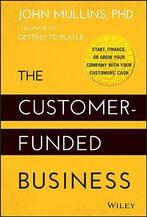
"The Customer-Funded Business" by John Mullins explores alternative methods of financing a startup or growing a business without relying on venture capital or traditional investment sources. The book advocates for leveraging customers as the primary source of funding. It presents five customer-funded business models and illustrates them with case studies from companies like Dell, Airbnb, and Banana Republic. The core idea is that by securing revenue directly from customers early on, businesses can validate their concepts, maintain control, and reduce dependency on external investors.
Who Should Read the Book?
- Aspiring Entrepreneurs who lack startup capital but want to start a business.
- Early-Stage Entrepreneurs trying to scale their businesses without relying on venture capital.
- Angel Investors who are interested in more sustainable investment opportunities.
- Business Incubator and Accelerator Leaders who guide new ventures.
- Family, Friends, and Initial Backers of startups to understand the benefits of customer funding.
- Corporate Innovators in established companies seeking new growth strategies.
10 Big Ideas from the Book:
- Customer Funding as an Alternative to Venture Capital: The book argues that securing funding from customers can be a more viable and sustainable option than seeking venture capital.
- Five Customer-Funded Models: The book identifies five key models: Matchmaker Models, Pay-in-Advance Models, Subscription Models, Scarcity Models, and Service-to-Product Models.
- Focus on Customer Validation: Before seeking external investment, businesses should validate their product or service by generating revenue from customers.
- Retaining Control and Equity: By avoiding early venture capital, entrepreneurs can maintain more control over their company and retain a larger equity stake.
- Negative Working Capital: Many customer-funded models result in negative working capital, meaning companies receive cash from customers before they need to pay their suppliers.
- Proving Market Demand: Customer funding forces entrepreneurs to prove there is a real market for their product, reducing the risk for future investors.
- The Drawbacks of Early Capital: The book highlights how raising capital too early can distract from building the business and lead to unfavorable terms for the founders.
- Global Success Stories: The book is filled with stories of companies worldwide that have successfully used customer funding to grow, illustrating that this approach is not just theoretical but practical and proven.
- The Magic of Traction: Customer traction is essential for growth, and it can attract better investment terms later when external funding is required.
- Pragmatic Advice for Implementation: The book provides practical steps on how to implement these models and what pitfalls to avoid.
Summary of Key Insights from "The Customer-Funded Business" by John Mullins
1. The Core Concept: Customer-Funded Models
The book's primary insight is that businesses do not need to rely on traditional venture capital (VC) or angel investments to start, finance, or grow. Instead, companies can use customer-funded models to generate the cash flow needed to sustain and scale their operations. This approach not only reduces the financial risk but also validates the business idea by proving that customers are willing to pay for it.
2. Five Customer-Funded Business Models
Mullins identifies five distinct customer-funded models that have been successfully used by various companies:
-
Matchmaker Models:
- Explanation: These businesses connect buyers and sellers without holding inventory. Examples include real estate brokers and platforms like Airbnb.
- Key Insight: By taking a commission or fee for facilitating transactions, companies can generate revenue without significant upfront investment.
-
Pay-in-Advance Models:
- Explanation: Customers pay for a product or service before it is delivered. Dell is a classic example, where customers paid before their computers were built.
- Key Insight: This model helps finance production costs and ensures that there is market demand before scaling up.
-
Subscription Models:
- Explanation: Customers subscribe to receive goods or services on a regular basis, providing a predictable and recurring revenue stream. Netflix and SaaS companies use this model.
- Key Insight: Subscriptions provide stable cash flow, which can be reinvested into the business for growth and development.
-
Scarcity Models:
- Explanation: These models create a sense of urgency by offering limited quantities of products for a short period, often resulting in immediate sales. Vente-privee, a flash sale retailer, exemplifies this.
- Key Insight: Scarcity drives customer action and accelerates cash flow, which can then be reinvested quickly.
-
Service-to-Product Models:
- Explanation: Companies start by offering a customized service, then productize it for wider distribution. Microsoft began by providing services before selling packaged software.
- Key Insight: This model allows a company to refine its offering based on client feedback before scaling up with a product.
3. Advantages of Customer Funding
-
Validation and Market Fit: By generating revenue directly from customers, businesses can validate their product-market fit early on. This reduces the risk of developing a product that no one wants.
-
Retaining Equity and Control: Customer funding allows entrepreneurs to retain more equity and control over their company compared to early-stage VC funding, which often demands significant ownership and decision-making power.
-
Increased Focus on the Customer: These models force entrepreneurs to focus on solving real customer problems, leading to better products and services.
-
Risk Reduction: Customer funding reduces the financial risk for both the entrepreneur and potential investors. By the time external capital is sought, the business model has been de-risked through proven customer demand.
-
Frugality and Efficiency: With limited capital, businesses are forced to be more efficient and frugal, which often leads to better financial management and more innovative solutions.
4. Implementation Challenges and Considerations
While customer funding offers many benefits, it also comes with challenges that entrepreneurs and product managers must consider:
-
Customer Acquisition: The biggest challenge in customer-funded models is acquiring customers early on. Entrepreneurs need strong sales and marketing strategies to convince customers to pay upfront or subscribe.
-
Managing Cash Flow: These models often involve complex cash flow management, especially when scaling up. Entrepreneurs must carefully manage the timing of cash inflows and outflows.
-
Building Trust: Convincing customers to pay in advance or subscribe requires building trust. This can be challenging for new businesses without a track record.
-
Scalability: Some customer-funded models, particularly service-to-product, can be difficult to scale without eventually seeking external capital. Entrepreneurs need to plan how to transition from a service model to a scalable product.
5. Insights for Entrepreneurs
-
Start Small and Focus on Customers: Entrepreneurs should focus on solving a specific problem for a small group of customers and use the revenue generated to grow organically.
-
Leverage Customer Feedback: Use customer interactions not just for funding but also to gather feedback and iterate on the product or service.
-
Think Long-Term: While customer funding helps avoid early dilution of equity, entrepreneurs should consider long-term growth strategies, including when and how to raise external capital if necessary.
-
Embrace Frugality: The constraints of limited capital often lead to more disciplined financial management and innovation. Entrepreneurs should embrace this mindset as they grow their business.
6. Insights for Product Managers
-
Customer-Centric Development: Product managers should prioritize features and products that customers are willing to pay for upfront, ensuring that development efforts are aligned with real market needs.
-
Data-Driven Decisions: Utilize customer data from sales and subscriptions to drive product development and prioritize features that will increase customer retention and acquisition.
-
Focus on Recurring Revenue: For product managers in SaaS or subscription-based models, the focus should be on enhancing the value proposition to increase customer lifetime value and reduce churn.
-
Scalability and Productization: Product managers should consider how services can be standardized and productized over time, allowing the company to scale without significantly increasing costs.
-
Strategic Pricing: In customer-funded models, pricing strategies are critical. Product managers must find the right balance between customer value and company sustainability.
7. Learning from Success Stories
The book is rich with case studies of companies that successfully used customer-funded models. Entrepreneurs and product managers alike can learn from these examples to avoid common pitfalls and replicate successful strategies. For instance, Dell's use of a pay-in-advance model ensured that it had cash on hand to build its computers, reducing financial risk and enabling rapid growth.
Conclusion
"The Customer-Funded Business" provides a comprehensive framework for entrepreneurs and product managers to start, finance, and grow businesses without traditional funding. By focusing on customer needs and leveraging their cash flow, businesses can achieve sustainable growth while maintaining control and equity. The book's practical advice and real-world examples make it an essential read for anyone involved in launching or managing a business.
Which Other Books Are Used as Reference?
- "The New Business Road Test" by John Mullins
- "Getting to Plan B" by John Mullins and Randy Komisar
- "Technology Ventures" by Thomas Byers, Richard Dorf, and Andrew Nelson
- "Scaling Up" by Verne Harnish
- "The Monk and the Riddle" by Randy Komisar
- "The Real Deal" by James Caan
Related Books - Business Strategy and Management
| No | Book | Author | 1 | Good to Great | Jim Collins | 2 | Scaling Up | Verne Harnish | 3 | Exponential Organisations | Salim Ismail | 4 | The Automatic Customer | John Warrillow | 5 | Blitzscaling | Reid Hoffman and Chris Yeh | 6 | Who - The A Method for Hiring | Geoff Smart and Randy Street | 7 | The Revenue Acceleration Playbook | Brent Keltner |
|---|